Singapore Specialized Engineering Pte Ltd.
(BCA Registered Contractor)
Thermoplastic traffic arrow
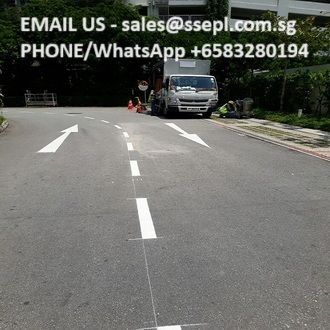
Thermoplastic traffic arrow application—encompassing mechanical surface profiling, high-tack resin priming, precision CAD stencil alignment, molten thermoplastic extrusion, retroreflective glass bead broadcasting, and high-friction anti-skid finishing—is an essential civil surface engineering service for public roadways, signalized intersections, commercial car park decks, and logistics terminals across Singapore. Deployed across Land Transport Authority arterial corridors, multi-lane expressway approaches, multi-storey car park driving aisles, bus interchanges, and industrial warehouse aprons, professional thermoplastic applicators install crisp, high-visibility directional arrows that guide vehicle lane selection and traffic flow. Directional traffic arrows experience intense multi-directional tire shear, continuous steering scrub, heavy axle braking forces, standing rainwater pooling, and relentless tropical solar exposure. Standard cold-applied liquid paints under these severe mechanical stresses rapidly erode, flake, peel, or fade, causing lane confusion, sudden vehicle merging, and heightened collision risks at junctions and ramps. Executed in strict compliance with Land Transport Authority Standard Details of Road Elements, Building and Construction Authority guidelines, Workplace Safety and Health regulations, and Singapore Standard SS589 and SS498 specifications for thermoplastic road marking materials, expert thermoplastic traffic arrow application delivers exceptional bond strength, rapid tack-free curing, bright lightfast luminance, and high pendulum slip resistance. Utilizing specialized melt kettles, hand-screed applicators, laser-cut metal stencils, preformed thermoplastic arrows, and premium synthetic resin formulations, Singapore Specialized Engineering Pte Ltd is a leading Thermoplastic Traffic Arrow Contractor In Singapore, delivering precision traffic direction demarcation and surface protection solutions islandwide.
What is a Thermoplastic Traffic Arrow Marking System?
A thermoplastic traffic arrow marking system utilizes solvent-free synthetic polymer resin compounds applied at molten temperatures through calibrated stencils or preformed inlays to create high-build, elastomeric, and wear-resistant directional symbols over asphalt and concrete pavements.
Synthetic Resin Binders: Hydrocarbon or alkyd polymer resins heated to liquid state that solidify rapidly upon cooling, forming a tenacious mechanical bond with bituminous asphalt and rigid concrete substrates.
High-Opacity Titanium Dioxide and UV-Stable Pigments: Lightfast white and non-fading yellow pigments engineered to maximize visual contrast against dark road surfaces, resisting chalking, oxidation, and exhaust discoloration under continuous tropical exposure.
Intermixed and Drop-On Retroreflective Glass Beads: High-index microscopic glass spheres incorporated within the molten resin matrix and broadcast onto the surface, ensuring continuous retroreflection under vehicle headlights and street lighting during nighttime driving and heavy rainfall.
High-Friction Anti-Skid Aggregates: Kiln-dried silica, quartz, or aluminum oxide particles embedded into the molten layer to maintain compliant pendulum slip resistance for turning, accelerating, and braking vehicles.
Precision Stencil and Preformed Geometry: High-build film profiles applied with razor-sharp edges and standardized regulatory dimensions, ensuring clear driver recognition from a safe stopping distance.
Why Engage a Specialized Thermoplastic Traffic Arrow Contractor?
Installing high-build thermoplastic traffic arrows across active intersections, multi-lane roads, or commercial car parks requires precise geometric layout, thermal management, and expert contractor capabilities:
Strict Compliance with LTA Regulatory Dimensions: Traffic arrows—including straight-ahead, left-turn, right-turn, combined turning arrows, and lane-merge arrows—must conform to exact LTA length, shaft width, and arrowhead angle specifications. Professional contractors guarantee exact regulatory accuracy.
Rapid Solidification and Minimal Traffic Disruption: Molten thermoplastic solidifies to full load-bearing hardness within minutes of application, allowing busy signalized junctions, expressway slip roads, and commercial car park aisles to reopen rapidly without prolonged lane closures.
Substrate Compatibility and Concrete Priming: Applying hot-melt compounds over smooth concrete car park decks or aged asphalt requires specialized tack-coat primers to eliminate moisture blistering, edge lifting, and premature bond failure under heavy steering scrub.
All-Weather Retroreflectivity and Anti-Slip Safety: Expert applicators balance bead drop rates and anti-skid aggregate distribution to ensure clear lane guidance during nighttime driving and reliable tire traction during tropical downpours.
What Services Do Thermoplastic Traffic Arrow Contractors Provide?
Professional thermoplastic traffic arrow contractors deliver comprehensive surface preparation, layout engineering, and directional marking services:
Comprehensive surface preparation including dustless diamond grinding, mechanical scarification, high-pressure waterjetting, surface degreasing, and high-tack primer application.
Precision layout plotting and hot-melt application for straight-ahead arrows, left and right turning arrows, combination directional arrows, U-turn symbols, and lane-drop deflection arrows.
Installation of specialized car park directional arrows for helical ramps, one-way driving aisles, entry and exit portals, and basement parking levels.
Drop-on retroreflective glass bead and anti-skid mineral aggregate broadcasting during molten screed or thermal fusion application.
Complementary thermoplastic line striping including lane dividers, stop lines, give-way markings, keep-clear boxes, and directional text stencils.
Hydro-blasting, thermal lancing, or mechanical scarification of worn, peeling, or obsolete legacy traffic arrows prior to new application.
Where Are Thermoplastic Traffic Arrows Deployed?
Thermoplastic traffic arrow systems are deployed across diverse public, commercial, and industrial transport infrastructure throughout Singapore:
Public Expressways and Signalized Intersections: Applied across multi-lane arterial roads, slip road merge lanes, turning pockets, and junction approaches to enforce orderly lane discipline.
Multi-Storey and Basement Car Parks: Installed across commercial mall parking decks, office tower garages, helical speed ramps, and one-way circulation aisles.
Transport Hubs and Bus Interchanges: Deployed across public bus bay approaches, taxi queue lanes, ferry terminal drop-off loops, and airport access roads.
Industrial Estates and Logistics Terminals: Marked across heavy container truck corridors, warehouse loading dock approaches, factory access roads, and yard circulation lanes.
Why Choose Singapore Specialized Engineering Pte Ltd?
Singapore Specialized Engineering Pte Ltd brings extensive civil surface engineering expertise, state-of-the-art hot-melt application machinery, and strict adherence to safety and quality standards to every project. Utilizing batch-tested SS589 and SS498 thermoplastic resins, high-luminance glass beads, precision stencils, and experienced site application crews, their team guarantees razor-sharp arrow definition, high retroreflectivity, and long-term resistance against heavy wheel wear and steering scrub. Road authorities, facility managers, town councils, and main civil contractors trust their rapid mobilization and site execution.
Contact us via whatsapp+6583280194 or email sales@ssepl.com.sg today to schedule a consultation.