Singapore Specialized Engineering Pte Ltd.
(BCA Registered Contractor)

Thermoplastic pavement marking on concrete
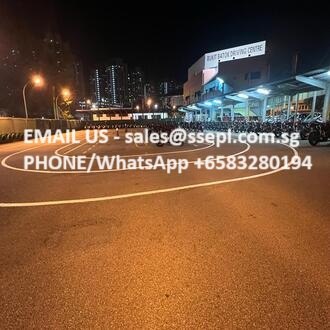
Thermoplastic pavement marking on concrete application—encompassing mechanical surface profiling, moisture testing, specialized tack-coat priming, molten thermoplastic extrusion, retroreflective glass bead broadcasting, and high-precision line striping—is a specialized civil surface engineering service for concrete roadways, multi-storey parking decks, bus interchanges, and industrial aprons across Singapore. Applying hot-melt thermoplastic materials directly onto rigid concrete pavements presents unique technical challenges compared to flexible asphalt substrates. Concrete surfaces feature smooth, dense matrix textures, residual curing compounds, alkali surface humidity, and potential moisture vapor emissions that prevent direct mechanical bonding. Without proper substrate preparation and specialized chemical priming, thermoplastic markings applied to concrete rapidly suffer from edge flaking, air blistering, moisture delamination, and premature debonding under heavy vehicular traffic. Executed in strict compliance with Land Transport Authority specifications, Building and Construction Authority guidelines, Workplace Safety and Health regulations, and Singapore Standard SS589 for thermoplastic road marking materials, expert thermoplastic pavement marking on concrete ensures maximum mechanical keying, high retroreflectivity, rapid cure times, and exceptional longevity. Utilizing dustless shot-blasting, mechanical scarifiers, automated heat-monitoring kettles, and high-tack epoxy or acrylic primers, Singapore Specialized Engineering Pte Ltd is a leading Thermoplastic Pavement Marking On Concrete Contractor In Singapore, delivering durable traffic demarcation and surface engineering solutions islandwide.
What is a Thermoplastic Pavement Marking System on Concrete?
A thermoplastic pavement marking system on concrete combines high-adhesion chemical primer technology with a molten synthetic resin compound engineered to create a fused, wear-resistant, and reflective line over rigid concrete surfaces.
Specialized Concrete Primers: Solvent-borne acrylic or epoxy-based tack coats formulated to penetrate dense concrete pores, seal surface dust, neutralize alkalinity, and establish a high-strength chemical bridge between the concrete slab and molten thermoplastic resin.
Hydrocarbon and Alkyd Synthetic Binders: Solid thermoplastic polymer resins melted to liquid form that solidify rapidly upon cooling, creating a flexible, high-build layer capable of withstanding heavy axle loads and wheel shear stress.
Intermixed and Drop-On Retroreflective Glass Beads: Microscopic glass spheres incorporated into the molten matrix and broadcast onto the cooling surface to maintain high nighttime luminance under headlight illumination.
High-Opacity Pigments and Micro-Fillers: UV-stable titanium dioxide white and lightfast yellow pigments engineered to resist weathering, tire scuffing, and vehicle exhaust staining.
Anti-Skid Mineral Aggregates: Kiln-dried quartz or aluminum oxide particles embedded into the molten layer to ensure adequate pendulum slip resistance across wet concrete surfaces and steep ramp approaches.
Why Engage a Specialized Thermoplastic Contractor for Concrete Surfaces?
Applying hot-melt thermoplastic over concrete slabs requires specialized chemical knowledge and precision installation capabilities:
Substrate Surface Profiling and Laitance Removal: Smooth troweled concrete and legacy curing membranes lack the mechanical anchor profile necessary for coating adhesion. Specialized contractors utilize dustless shot-blasting or diamond grinding to expose aggregate pores for optimal bonding.
Moisture Testing and Blistering Mitigation: Trapped moisture beneath impervious thermoplastic lines on concrete creates steam bubbles during hot application, leading to air pockets and adhesion failure. Expert contractors conduct moisture vapor testing and apply moisture-tolerant sealers prior to installation.
Specialized Primer Application and Tack Calibration: Thermoplastic applied directly to unprimed concrete will disbond quickly. Professional contractors apply specialized tack-coat primers at calibrated film thicknesses, allowing adequate flash-off time to maximize inter-coat adhesion.
Thermal Expansion and Joint Detailing: Rigid concrete slabs expand, contract, and shift along movement joints. Professional contractors execute clean joint cuts and apply flexible thermoplastic formulations to prevent stress cracking along slab boundaries.
What Services Do Thermoplastic Marking Contractors Provide for Concrete Surfaces?
Professional thermoplastic pavement marking contractors deliver comprehensive surface engineering, profiling, and precision demarcation services for concrete substrates:
Comprehensive concrete substrate preparation including dustless shot-blasting, diamond grinding, mechanical scarification, laitance removal, and high-pressure cleaning.
Application of high-tack epoxy or solvent-based acrylic primers engineered specifically for concrete pavement adhesion.
Precision extrusion and hand-screed thermoplastic line marking for driving lanes, parking stalls, bus lanes, yellow keep-clear boxes, and hazard zones.
Application of high-build stencils for handicap accessible bays, EV charging lots, pedestrian crossings, speed humps, and directional arrows.
Drop-on retroreflective glass bead and anti-skid mineral aggregate broadcasting during hot-melt spray or screed application.
Hydro-blasting, thermal lancing, or mechanical scarification of failing, flaking, or non-compliant legacy markings prior to new primer and thermoplastic application.
Where Are Thermoplastic Markings on Concrete Deployed?
Thermoplastic pavement marking systems on concrete are deployed across diverse infrastructure and commercial facilities throughout Singapore:
Concrete Multi-Storey and Podium Car Parks: Applied across internal driving aisles, ramp enclosures, parking bays, speed humps, and pedestrian walkways.
Public Bus Interchanges and Transport Depots: Installed across concrete bus bays, staging aprons, and maintenance lanes subjected to continuous heavy axle loading.
Industrial Logistics Depots and Port Aprons: Deployed across heavy vehicle access routes, container terminal pads, loading aprons, and factory access roads.
Concrete Expressways and Flyover Structures: Marked across rigid concrete road decks, slip roads, toll plazas, and tunnel approaches.
Why Choose Singapore Specialized Engineering Pte Ltd?
Singapore Specialized Engineering Pte Ltd brings extensive civil surface engineering expertise, specialized concrete profiling equipment, and strict adherence to safety and quality standards to every project. Utilizing batch-tested SS589 thermoplastic resins, high-tack concrete primers, and experienced site application crews, their team guarantees razor-sharp line definition, high retroreflectivity, and long-term adhesion against heavy wheel abrasion. Facility managers, town councils, building owners, and main civil contractors trust their rapid mobilization and site execution.
Contact us via whatsapp+6583280194 or email sales@ssepl.com.sg today to schedule a consultation.