Singapore Specialized Engineering Pte Ltd.
(BCA Registered Contractor)
Thermoplastic pavement marking on concrete applicator
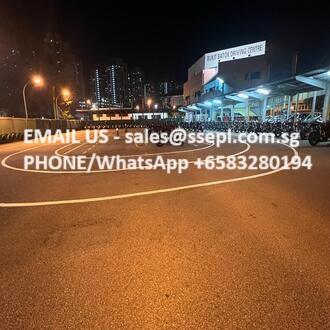
Thermoplastic pavement marking on concrete application—encompassing surface preparation, deep-penetrating primer application, thermal surface drying, high-temperature screed extrusion, and retroreflective glass bead broadcasting—is a highly technical civil surface engineering service across Singapore’s concrete infrastructure networks, expressway viaducts, bridge decks, bus interchanges, multi-storey carpark decks, and industrial facilities. Applying hot-melt thermoplastic markings directly over concrete substrates presents unique chemical and mechanical adhesion challenges compared to traditional flexible asphalt pavements. Due to concrete’s non-porous surface, laitance formation, power-troweled finishes, and inherent moisture vapor emissions, specialized surface engineering techniques and dedicated epoxy or resin-based bonding primers are vital to ensure permanent inter-layer adhesion. Executed in strict compliance with Land Transport Authority Standard Details of Road Elements, Singapore Standard for Specification for Thermoplastic Road Marking Materials, and Workplace Safety and Health regulations, specialized hot-melt application guarantees long-term durability against tire shear stress, heavy bus axle loads, and environmental exposure. Singapore Specialized Engineering Pte Ltd is a premier Thermoplastic Pavement Marking On Concrete Applicator In Singapore, providing specialized hot-melt application equipment, concrete-grade primers, precision metal stencils, and safety-certified site applicators islandwide.
What is a Concrete-Grade Thermoplastic Marking System?
A concrete-grade thermoplastic marking system utilizes specialized bonding primers, high-melt resin compounds, and surface-applied retroreflective elements tailored specifically for rigid cementitious pavements.
Dual-Component Penetrating Primers: High-tack synthetic or epoxy resin primers engineered to penetrate power-troweled concrete, sealing capillary pores and creating a high-strength chemical bridge between concrete and hot thermoplastic.
Mechanical Surface Laitance Removal: Shot-blasting, concrete grinding, or scarifying to remove surface cement paste and laitance, establishing an optimal mechanical key profile for maximum adhesion.
High-Melt Thermoplastic Resin Matrix: Hydrocarbon or alkyd resin formulations enriched with titanium dioxide pigments, calcium carbonate fillers, and premixed glass beads designed to withstand thermal expansion and contraction cycles on concrete decks.
Surface-Drop Glass Bead Integration: Pressurized or gravity-fed broadcasting of certified optical glass beads immediately behind the melt shoe to guarantee retroreflectivity under night driving conditions.
Thermal Moisture Clearance: Deep-surface thermal drying using high-velocity propane heat lances to eliminate trapped concrete moisture and prevent vapor blistering or delamination.
Rapid Curing and Traffic Readiness: Sets rapidly into a solid mass following extrusion, allowing swift reopening of critical infrastructure and minimizing traffic disruption.
Why Engage a Specialized Applicator for Concrete Substrates?
Applying hot-melt thermoplastic onto concrete surfaces requires specialized civil engineering techniques to avoid adhesive failures and surface flaking:
Prevention of Moisture Vapor Blistering: Trapped moisture beneath non-porous concrete expands under hot thermoplastic resin, creating micro-voids, blisters, and premature debonding. Professional applicators use thermal moisture meters and heat lances to dry concrete before priming.
Elimination of Surface Laitance Weakness: Fresh or smooth-troweled concrete develops a thin, brittle top layer called laitance. Applying thermoplastic directly over laitance leads to surface flaking under heavy wheel impact. Applicators mechanically abrade the surface before coating.
Specialized Primer Curing and Tack Timing: Thermoplastic must be applied within a precise curing window after primer application—applying too early causes solvent gas entrapment, while applying too late reduces chemical bonding efficiency.
Strict LTA SDRE Compliance: All line dimensions, edge alignment, color chromaticity, and glass bead distribution must pass rigorous civil engineering clerk-of-works site inspections and qualified person sign-offs.
What Services Do Concrete Thermoplastic Applicators Provide?
Professional concrete thermoplastic applicators deliver complete surface preparation, priming, layout, and hot-melt application services:
Supply and screed or extrusion application of white, yellow, red, and blue thermoplastic line markings on concrete surfaces.
Precision marking of parking bay lines, lane dividers, directional arrows, bus bay indicators, box junctions, and speed hump chevrons across concrete structures.
Mechanical concrete grinding, scarifying, high-pressure washing, thermal lance drying, and application of concrete tack-coat primers.
Removal of old, failed, or non-compliant concrete paint markings via dustless shot-blasting or hydro-jetting.
Installation of complementary traffic safety components, including retroreflective pavement studs, rubber wheel stops, and surface tactile indicators.
Maintenance, re-screeding, and touch-up services for worn line markings across multi-storey carparks, transport hubs, and bridge decks.
Where Are Concrete Thermoplastic Markings Deployed?
Thermoplastic markings on concrete substrates are deployed across critical infrastructure and commercial properties throughout Singapore:
Expressway Viaducts, Elevated Flyovers, and Concrete Bridge Decks: Applied across LTA-managed concrete roadways subject to continuous high-speed traffic and heavy axle loads.
Bus Interchanges, Integrated Transport Hubs, and Depot Aprons: Installed over reinforced concrete slabs exposed to heavy bus scrubbing, diesel exposure, and continuous turning movements.
Multi-Storey Carparks and Basement Concrete Decks: Marked along driving aisles, parking bays, ramp inclines, and loading docks across commercial and residential developments.
Port Terminals, Logistics Parks, and Industrial Warehouses: Applied across heavy industrial concrete pavements, container handling areas, and forklift pathways.
Pedestrian Overpasses, MRT Station Decks, and Civic Plazas: Marked along concrete walkways, emergency access routes, and public safety zones.
Why Choose Singapore Specialized Engineering Pte Ltd?
Singapore Specialized Engineering Pte Ltd stands out through civil engineering technical expertise, specialized concrete priming technology, and complete alignment with LTA SDRE standards and material specifications. Utilizing concrete-grade primers, precision thermal lances, laser-guided screed applicators, and premium glass bead drop systems operated by safety-certified site crews, their team delivers sharp, durable, and highly retroreflective line markings on rigid pavements. Facility managers, main civil contractors, town councils, and estate developers rely on their rapid mobilization, thorough surface prep, and dependable project execution.
Conclusion
Engaging a certified applicator specializing in thermoplastic pavement marking on concrete is essential for delivering durable, retroreflective, non-slip, and fully compliant road infrastructure across rigid pavements in Singapore. Certified applicators guarantee thorough mechanical surface prep, correct primer application, precise layout execution, and superior retroreflectivity under all weather conditions. For dependable concrete thermoplastic application, custom stencil fabrication, and civil road marking support, Singapore Specialized Engineering Pte Ltd is your trusted Thermoplastic Pavement Marking On Concrete Applicator In Singapore.
Contact us via whatsapp+6583280194 or email sales@ssepl.com.sg today to schedule a consultation.